Consistency is the most talked-about goal in content creation — and the most commonly failed. But here's what the conversation usually misses: staying consistent isn't about grinding harder. It's about designing a system that makes showing up the path of least resistance. These 10 tips have helped thousands of creators at Calend go from sporadic posting to reliable, sustainable rhythms.
Plan Before You Post
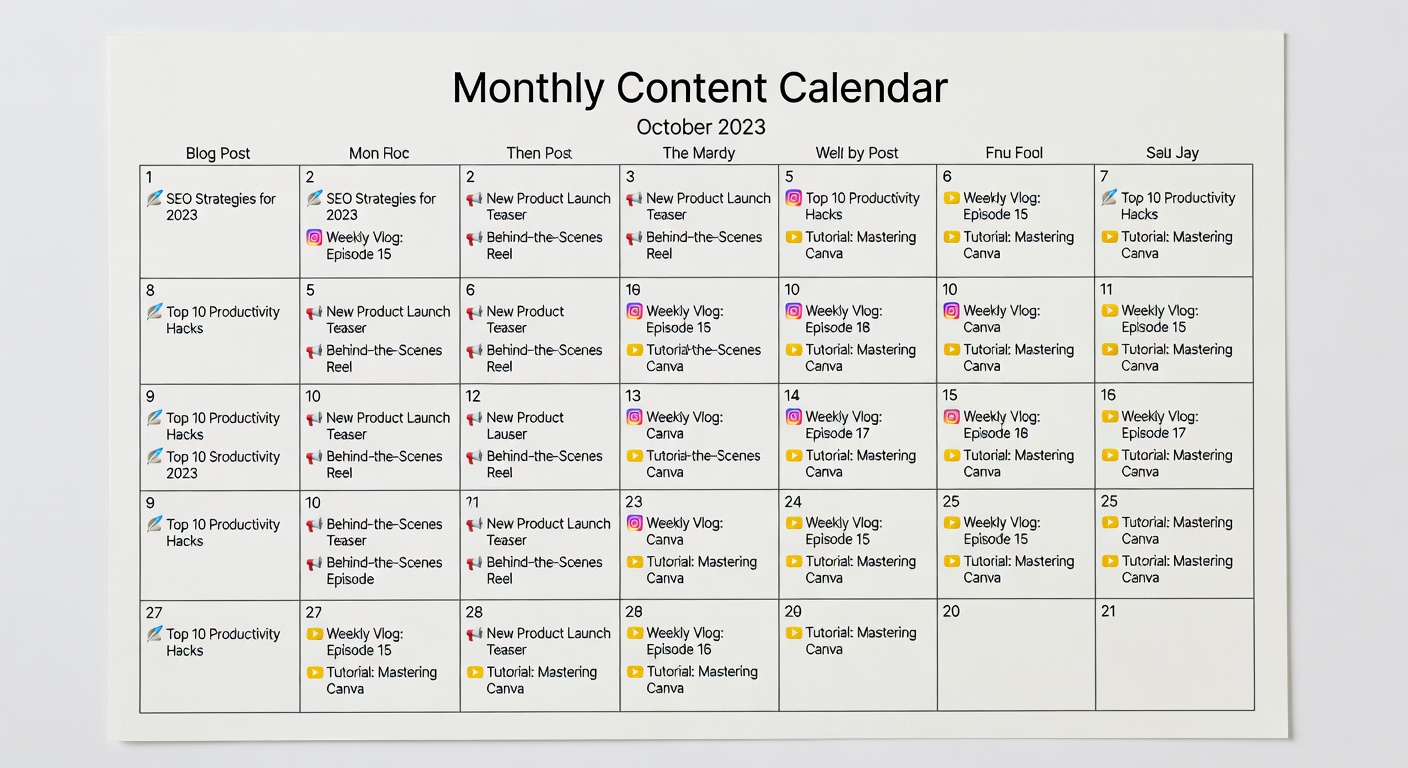
The biggest enemy of consistency is deciding what to post the day you need to post it. Decision fatigue kicks in, motivation falls short, and suddenly the week ends without a single piece published. Instead, set aside 30 minutes each Sunday to plan your entire week. Know what you're posting and when before you open a blank document. Planning and creating are different mental tasks — keep them separate.
Use Content Buckets
A content bucket is a repeating topic category that you return to week after week. For example: Educational (how-tos), Personal (behind-the-scenes), Social Proof (client results), and Promotional (offers). By pre-defining 4–6 buckets, you eliminate the question "what should I post?" Every post simply falls into a bucket you've already decided on. Rotate through them and your content library stays diverse without the chaos.
"The creators who never miss a post don't rely on motivation. They designed a system that doesn't require motivation to run."
Batch on Sundays
Designate one day per week — Sunday works well for many creators — as your creation day. Spend 2–3 hours producing everything you'll need for the week ahead. Writing captions, recording short videos, designing graphics — all done at once, in a single focused session. When the week gets busy (and it always does), you're not scrambling. Everything is already done and scheduled.
Have an Idea Vault
Ideas don't come on demand. They arrive in the shower, during a walk, when a client says something interesting. Build a running "idea vault" — a simple note, spreadsheet, or dedicated app — where you capture every content idea the moment it appears. When it's time to plan, you're pulling from a full bank, not staring at a blank screen. Aim to always have at least 20 ideas in reserve.
Use Templates Ruthlessly
Templates are not a crutch — they're leverage. Every content type you produce regularly (tutorial post, weekly tip, behind-the-scenes update) should have a template. A caption template. A video script structure. A graphic layout. Templates eliminate the "starting from scratch" problem, cut creation time in half, and maintain brand consistency without conscious effort. Make new templates every time you create something you'd want to repeat.
Set Minimum Viable Posting — Not Maximum
Most creators set aspirational goals: 7 posts a week, daily stories, 3 Reels a month. When life happens and they miss that target, they feel like they've failed and often give up entirely. Instead, define your minimum — the number of posts you'll commit to even in your worst week. Maybe it's one. Whatever it is, that's your non-negotiable floor. Everything above it is a bonus, not a baseline.
"Define your minimum viable week. Post that, no matter what. Everything else is gravy."
Repurpose Aggressively
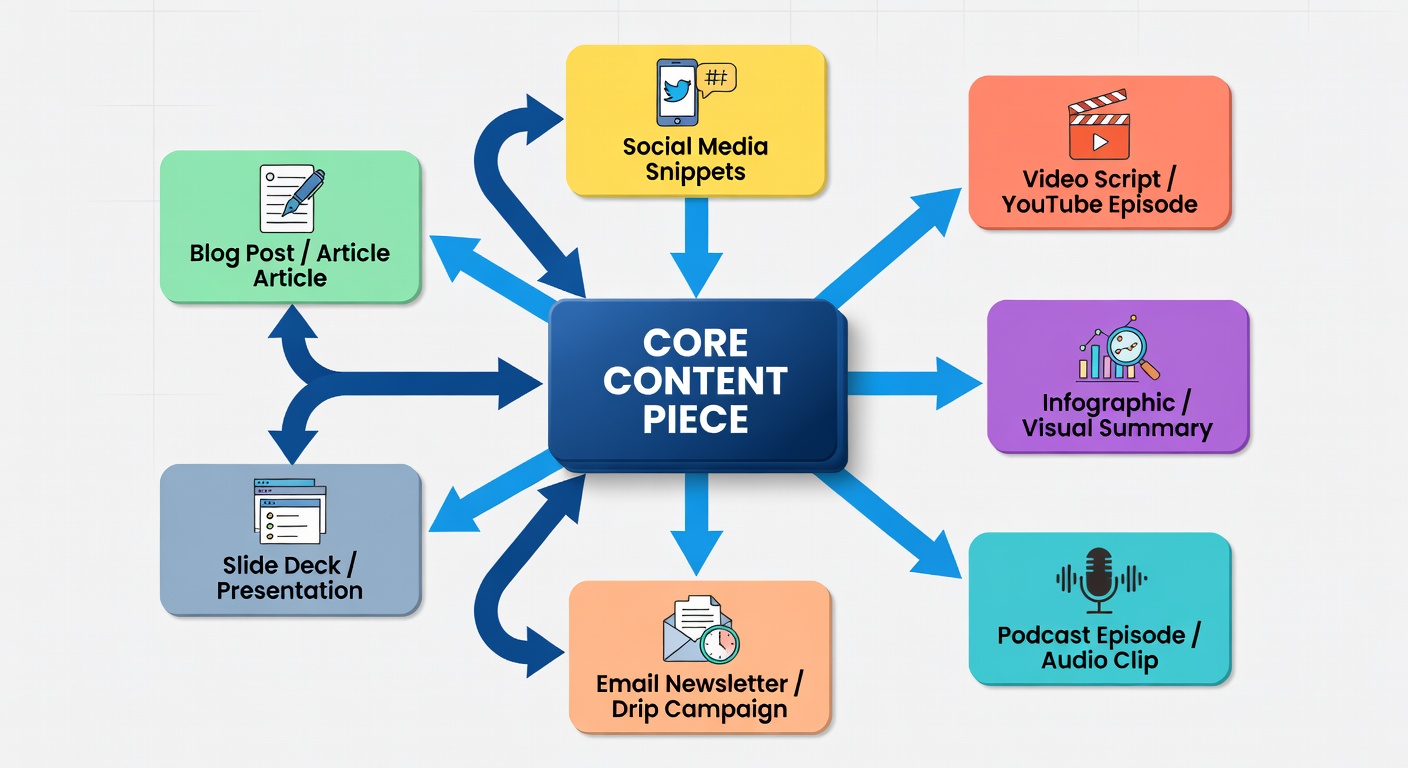
Every piece of content you create can become at least three others. A blog post becomes a carousel, a tweet thread, and a newsletter section. A YouTube video becomes short clips, quote graphics, and a podcast episode. Most creators think of repurposing as optional. The consistent ones treat it as a required step in every creation workflow. One idea, multiplied across platforms, without generating new ideas for each.
Track Only 2 Metrics
Data paralysis is real. When you're tracking follower count, reach, saves, shares, comments, click-through rate, and conversion rate simultaneously, you end up overwhelmed and confused. Pick two metrics that actually matter for your goals and focus on those exclusively. For most creators, that's engagement rate (how much people interact per post) and one growth metric (followers or email subscribers). Review them monthly. Ignore the rest.
Build In Rest Days
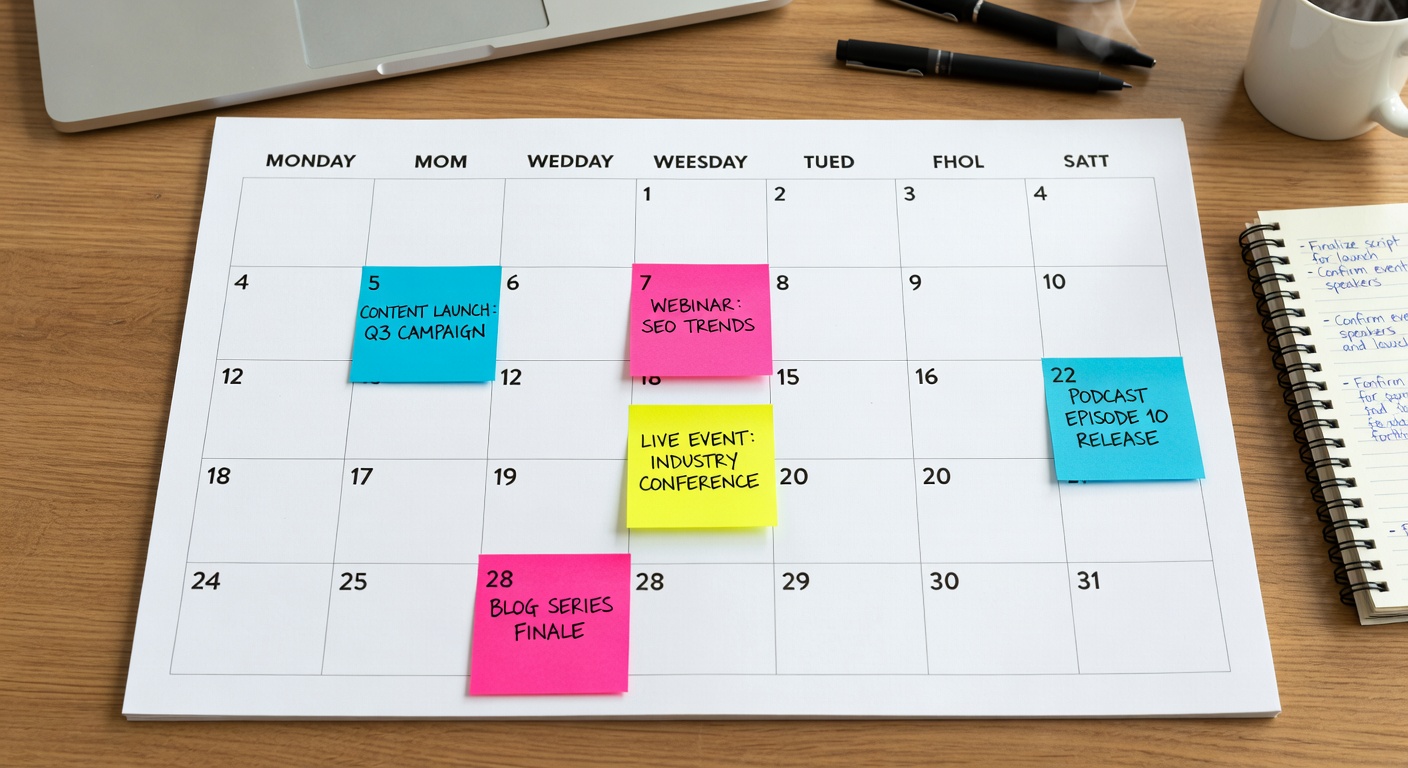
Sustainable systems include recovery time. Build it in deliberately. If you're planning a month of content, block out 4–6 days where nothing is scheduled. These buffer days absorb the unexpected — a family emergency, a creative block, a week of poor sleep. When something gets pushed, it lands on a buffer day, not on top of an already full schedule. Rest days aren't empty — they're insurance.
Review Monthly, Adjust Quarterly
The most consistent creators are not rigid — they're adaptive. At the end of every month, spend 15 minutes reviewing what you posted, what performed, and how you felt about the process. At the end of each quarter, make bigger adjustments: change your content mix, update your buckets, try a new format. A content system that doesn't evolve becomes stale. The review cycle keeps it relevant and keeps you engaged.
Putting It All Together
Consistency in content isn't a personality trait — it's an engineering challenge. The good news is that you don't need to implement all 10 of these at once. Start with #1 (plan before you post) and #6 (set a minimum). Those two changes alone will transform your relationship with content creation. Add more as each becomes habitual.
The creators who win over the long run aren't the most creative or the most talented. They're the ones who showed up consistently enough for their skills to compound. Build the system that makes showing up easy, and the results will follow.