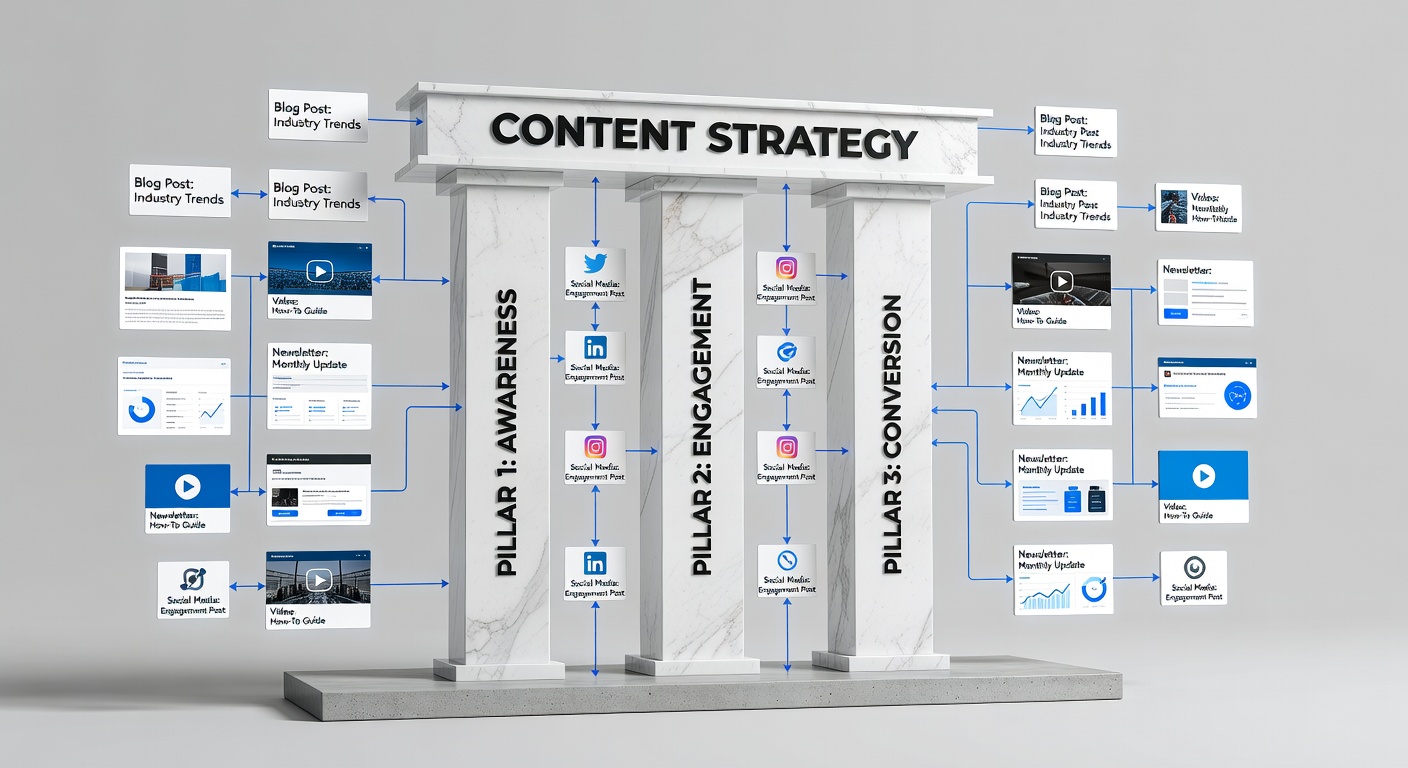
Content buckets are pre-defined categories that tell you exactly what type of content to create each day. No more staring at an empty scheduler wondering "what should I post today?"
A content bucket is a category of content with a specific purpose — educate, entertain, inspire, promote, or give people a look behind the curtain. Instead of inventing a new idea every time you sit down to post, you pick a bucket and fill it.
Think of buckets like the sections of a newspaper. The sports section doesn't suddenly cover cooking. Each section has a job. Your content should work the same way — every post should fit into a category with a clear purpose.
Once you define your buckets (most creators work best with 3–5), content planning becomes a matter of rotation, not invention. You're filling a structure — not starting from scratch every single day.
These five categories cover the full spectrum of what audiences want — and what algorithms reward. Most brands use all five; the question is how to balance them.
Teach your audience something genuinely useful. How-tos, tutorials, tips, myth-busting, and explainers. Builds trust and authority. Highest save and share rate of all bucket types.
Deep dive into Educational →Make them smile, laugh, or feel something. Memes, polls, challenges, relatable moments, and day-in-the-life content. Builds community and drives shares to new audiences.
Deep dive into Entertaining →Tell people about your products, services, and offers — but do it in a way that adds value. Done right, promotional content doesn't feel salesy; it feels like a natural recommendation.
Deep dive into Promotional →Quotes, transformation stories, milestone celebrations, and mindset shifts. Triggers high emotional engagement — comments, shares, and saves happen when content makes people feel something deep.
Deep dive into Inspirational →Show the process, the workspace, the mistakes, the team. BTS content humanizes your brand and builds the kind of trust that no polished ad can replicate. People buy from people they feel they know.
More BTS ideas coming soon →The recommended starting split for most content creators and brands. Adjust based on your goals — more promotional if you're launching, more educational if you're building authority.
For B2B brands: increase Educational to 40%, reduce Entertaining to 10%. For e-commerce: increase Promotional to 25%. These are starting points — test and adjust based on your analytics.
Every platform has different audience expectations. This table shows where each bucket performs strongest and where to dial it back.
| Content Bucket | TikTok | Twitter/X | YouTube | ||
|---|---|---|---|---|---|
| Educational | ★★★ | ★★★ | ★★★ | ★★★ | ★★★ |
| Entertaining | ★★★ | ★★☆ | ★★★ | ★★★ | ★★☆ |
| Promotional | ★★☆ | ★★☆ | ★☆☆ | ★★☆ | ★★★ |
| Inspirational | ★★★ | ★★★ | ★★☆ | ★★☆ | ★★☆ |
| Behind-the-Scenes | ★★★ | ★★★ | ★★★ | ★★☆ | ★★★ |
★★★ High performance | ★★☆ Medium performance | ★☆☆ Use sparingly
The real power of content buckets isn't in knowing what to post — it's in how they transform your creation workflow. When you sit down to batch-create content, you can dedicate entire blocks to one bucket type.
Two hours on Educational content. One hour on Behind-the-Scenes. An hour on Inspirational quotes and stories. You're in the zone for each type — not context-switching every 20 minutes between a how-to post and a meme.
The result: better content in less time, and a calendar that's filled for the week before Monday arrives.
Use the Calend Content Bucket Planner to map out your first 30 days of structured content.
Get the Free Planner